Don't miss our holiday offer - up to 50% OFF!

value of all cryptocurrencies

Value of all cryptocurrencies
(At the bottom of this page you will find frequently asked questions and answers. For example, we answer the questions: Is cryptocurrency legal? Why do Bitcoin have value https://mobilezidea.info/minimum-deposit-casino/why-choose-a-casino-with-a-10-bonus/? How do I buy cryptocurrency? Which exchange has the lowest fees?)
The total crypto market volume over the last 24 hours is $172.65B, which makes a 34.94% increase. The total volume in DeFi is currently $27.22B, 15.77% of the total crypto market 24-hour volume. The volume of all stable coins is now $161.34B, which is 93.45% of the total crypto market 24-hour volume.
Coinlore Independent Cryptocurrency Research Platform: We offer a wide range of metrics including live prices, market cap, trading volumes, historical prices, yearly price history, charts, exchange information, buying guides, crypto wallets, ICO data, converter, news, and price predictions for both short and long-term periods. Coinlore aggregates data from multiple sources to ensure comprehensive coverage of all relevant information and events. Additionally, we provide APIs and widgets for developers and enterprise users.
At the time of writing, we estimate that there are more than 2 million pairs being traded, made up of coins, tokens and projects in the global coin market. As mentioned above, we have a due diligence process that we apply to new coins before they are listed. This process controls how many of the cryptocurrencies from the global market are represented on our site.
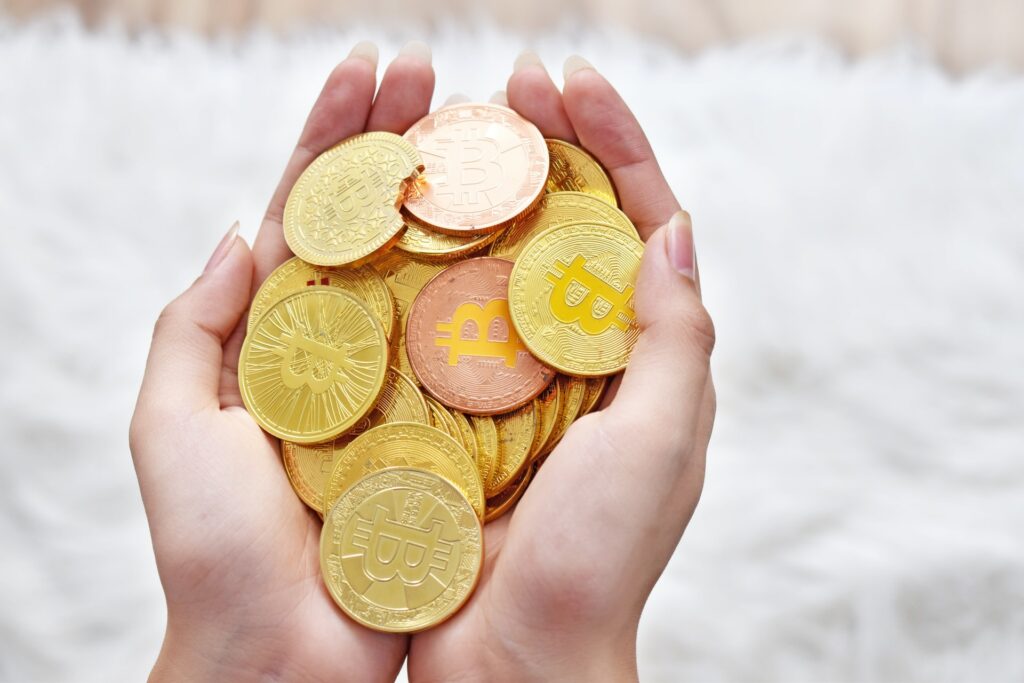
Market cap of all cryptocurrencies
Top cryptocurrencies such as Bitcoin and Ethereum employ a permissionless design, in which anyone can participate in the process of establishing consensus regarding the current state of the ledger. This enables a high degree of decentralization and resiliency, making it very difficult for a single entity to arbitrarily change the history of transactions.
The market cap of bitcoin and other major cryptocurrenciesare are listed below from largest market capitalization to smallest. Cryptocurrencies are also known as coins or virtual currency. The value of bitcoin is growing with time and is the largest currency by market cap currently. The currency data below is updated once every five minutes with the latest market cap data. Exchange rates for the currencies are shown in U.S. dollars. New coins are being brought to market via initial coin offerings frequently so expect the list of cryptocurrencies below to grow.
An altcoin is any cryptocurrency that is not Bitcoin. The word «altcoin» is short for «alternative coin», and is commonly used by cryptocurrency investors and traders to refer to all coins other than Bitcoin. Thousands of altcoins have been created so far following Bitcoin’s launch in 2009.

Top cryptocurrencies such as Bitcoin and Ethereum employ a permissionless design, in which anyone can participate in the process of establishing consensus regarding the current state of the ledger. This enables a high degree of decentralization and resiliency, making it very difficult for a single entity to arbitrarily change the history of transactions.
The market cap of bitcoin and other major cryptocurrenciesare are listed below from largest market capitalization to smallest. Cryptocurrencies are also known as coins or virtual currency. The value of bitcoin is growing with time and is the largest currency by market cap currently. The currency data below is updated once every five minutes with the latest market cap data. Exchange rates for the currencies are shown in U.S. dollars. New coins are being brought to market via initial coin offerings frequently so expect the list of cryptocurrencies below to grow.
Are all cryptocurrencies mined
With the number of new bitcoins issued per block decreasing by half approximately every four years, the final bitcoin (realistically the final satoshi) is not expected to be generated until 2140 (it might be earlier). The number of new bitcoins minted per block was 50 when Bitcoin was first established and has since decreased to 3.125 as of 2024—the next halving to 1.5625 is expected sometime in 2028.
Only the first individual, group, or business to solve these equations and validate a block of transaction receives what’s called a «block reward.» In the proof-of-work model, as this is known, block rewards are paid out in the cryptocurrency that’s been validated. For instance, if you validated a block of transactions on Ethereum’s network, thereby proving the transactions as true, you would be paid in Ether tokens as a reward. Miners make money by either hanging on to these rewards as an investment and cashing out later, or immediately converting their tokens to a fiat currency, like the U.S. dollar.
Bitcoin is the most well-known example of a cryptocurrency that can be obtained in this way. Other popular tokens, like Ethereum, utilize a different system called “proof of stake” and don’t rely on mining.
However, cryptocurrencies don’t have a central authority; rather, the cryptocurrency community and, in particular, cryptocurrency miners and network nodes manage them. For this reason, cryptocurrencies are often referred to as trustless. Because no single party or entity controls how a cryptocurrency is issued, spent, or balanced; you don’t have to put your trust in a single authority.